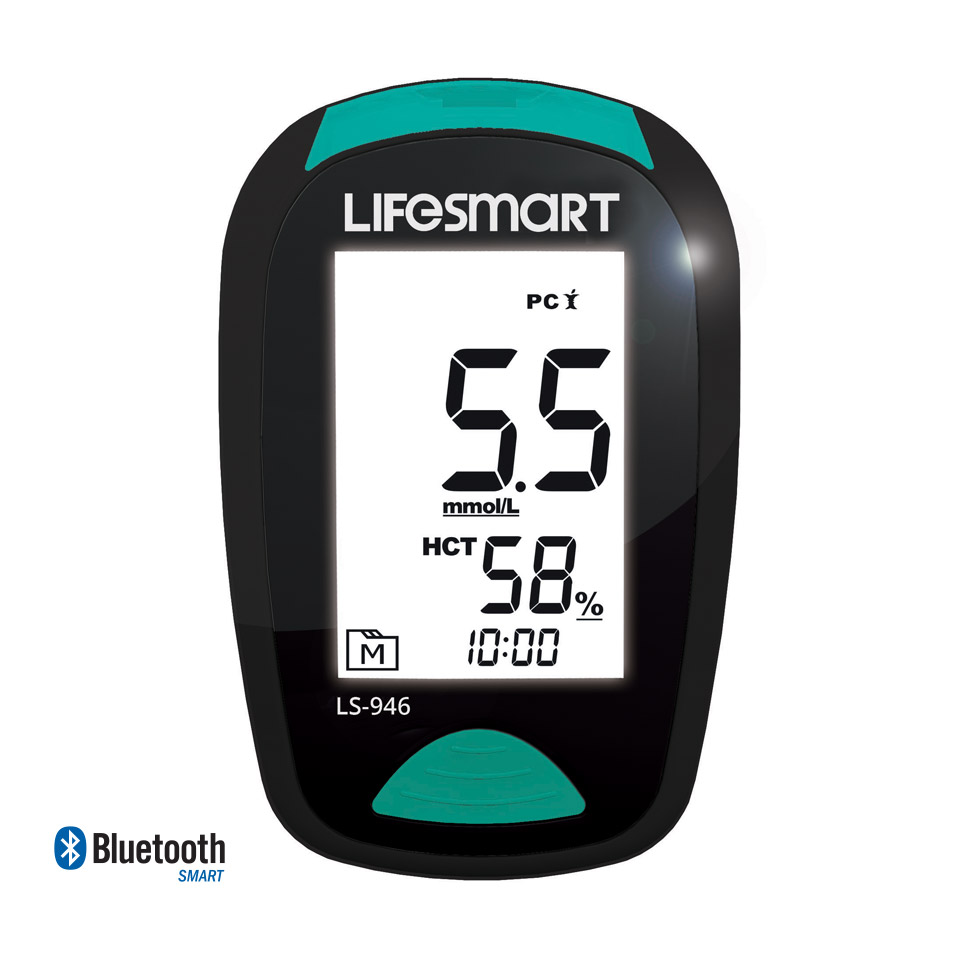
Three meters, three jobs
| Meter | Tests | Best for |
|---|---|---|
| Smart Blood Glucose plus Ketone, non-Bluetooth | Glucose and ketones | Everyday testing, no phone involved |
| Smart Blood Glucose plus Ketone, Bluetooth | Glucose and ketones | Anyone who wants readings logged automatically |
| Cholesterol Multi-functional Monitoring System | Cholesterol, Blood Glucose or Ketones | Monitoring between doctor visits |
Glucose plus ketones, non-Bluetooth
The straightforward one, and the right choice for most people.
It tests both glucose and ketones, with the strip deciding which test you are doing. No app, no pairing, no phone. Results stay in the meter's memory, which holds 1,000 readings, and go in a log book if you keep one.
It has a hematocrit range of 0% to 70%, wide enough to cover use from infants through to older adults, and it needs a sample of only 1.0 microlitre. A small sample means a shallower lancet setting, which means testing hurts less. There is a separate page on why hematocrit matters.
Choose it if you want a reliable meter and nothing else to go wrong. Phones change, apps get updated, accounts need passwords. A meter that does not depend on any of that still works in five years.
Glucose plus ketones, Bluetooth
The same testing, with readings sent to your phone.
Worth it if:
- You are tracking a pattern over weeks or months
- You take readings to appointments and want a record rather than a memory
- Someone else helps manage your diabetes and needs to see the numbers
- You would not reliably write them down otherwise
That last one is the honest reason most people should consider it. A log book only works if you fill it in. An automatic record is the one that still exists at your next appointment.
Cholesterol Multi-functional Monitoring System
A separate device for cholesterol testing at home, blood glucoe or ketone testing between the blood tests your doctor orders.
Cholesterol is normally measured in a laboratory a couple of times a year. If you are actively working on it, through diet, exercise or medication, a six month gap is a long time to wait to find out whether anything you are doing is working.
Home testing does not replace your doctor's blood test. It fills in the gap between them.
What about a combined everything meter?
In principle it sounds better.
Most people are better served by the glucose plus ketone meter for daily use, and a separate cholesterol system if cholesterol is something they are actively managing.
Do not forget the consumables
The meter is the cheap part over time. The strips are the ongoing cost, and they are the part that decides whether the system actually works.
- Glucose strips, for everyday testing
- Ketone strips, bought less frequently and easy to let expire. Check them whenever you reorder glucose strips
- Cholesterol strips, for the cholesterol system
- Lancets, one per test, and a safety lancet option where someone is testing another person
- Control solution, to confirm the strips are reading correctly
Check the strips match the meter. Strips are specific to the system, and the strip type is what tells the meter which test to run.
A note on subsidy
Blood glucose strips are often obtained through the National Diabetes Services Scheme, which requires registration and is accessed through registered pharmacies.
LifeSmart strips are not supplied through the NDSS. They are bought directly, which suits people who are not registered, who are testing for reasons outside a registration, or who would simply rather order online than visit an access point.
Ketone and cholesterol testing sit outside that arrangement anyway, so for those two the question does not arise.
Frequently asked questions
Can one meter do glucose and ketones? Yes. The LifeSmart Smart Blood Glucose plus Ketone system does both, with the strip determining the test.
Do I need the Bluetooth version? Only if you want readings recorded automatically. The testing is the same.
Can I use any strips with any meter? No. Use the strips made for your system.
Does a home cholesterol test replace a blood test? No. It is for monitoring between the tests your doctor arranges.
How do I know my meter is accurate? Use control solution, which has a known value. If the result is outside the expected range, the meter or the strips need attention.
This article is general information, not medical advice. Always follow the instructions supplied with your meter, and your doctor's or diabetes team's advice on how and when to test.