

Start with why you are measuring
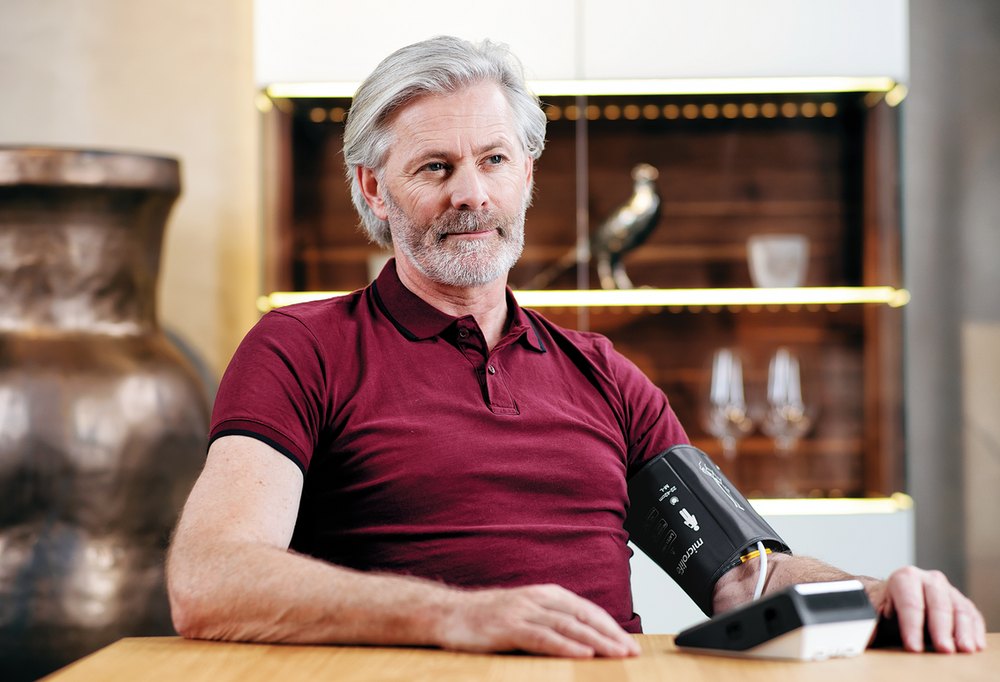
Every monitor in the range measures blood pressure accurately. What separates them is what else they do, and that depends entirely on your situation.
Three questions settle it:
- Are you simply tracking your blood pressure day to day?
- Is there a condition that makes accuracy or comfort more important than usual?
- Is stroke risk part of the picture?
The range at a glance
| Monitor | Best for |
|---|---|
| Able B1 Plus | Straightforward daily measurement at home |
| Able B2 Basic | Diabetes, kidney disease, pregnancy, adolescents, anyone needing a gentler or larger cuff, or anyone who would rather run on mains power than batteries |
| Able BT | People who want readings on their phone |
| Able B3 AFIB Advanced | Anyone with stroke risk in the picture |
Able B1 Plus
The straightforward one. A large backlit display, 120 readings of memory, irregular heartbeat detection, and a 22 to 42cm cuff that fits most adult arms.
If you have been told to keep an eye on your blood pressure and you want a reliable reading each morning without features you will never use, this is the one.
[VIDEO] Able B1 Plus Blood Pressure Monitor
File: Product Videos\ABLE B1 Plus BPM\ABLE B1 Plus BPM – Product Video.mp4
Place directly under this paragraph, 16:9, with the poster frame showing the monitor and cuff.
Caption: "The Able B1 Plus, set up and in use."
Able B2 Basic
The B2 adds three things that matter when accuracy matters more than usual.
- Clinically validated to the BIHS protocol with an A/A grade.[1] That is the top grade for both systolic and diastolic, and it is not something every monitor on the shelf can claim. There is a separate article on what validation means.
- Gentle+ technology, which adapts the inflation pressure as it measures, so the cuff squeezes less than a conventional monitor.
- Cuff Fit Check, which tells you at the start of the measurement whether the cuff is on well enough to give a good reading.
- A mains power adaptor in the box
It also takes the widest range of cuff sizes in the range, from a small 17 to 22cm through to an extra large 32 to 52cm.
Recommended for people with diabetes, kidney disease, pregnant women and adolescents, and for anyone who finds a standard cuff uncomfortable or needs a larger size.
Able BT
The connected one. Readings go to your phone instead of a notebook, it holds two users, and it has MAM averaging, which takes three readings in a row and gives you the average rather than a single number.
Worth it if you are taking readings over weeks or months and will be showing them to a doctor. A long record is far more useful to a GP than a handful of remembered numbers, and a monitor that logs automatically is one you are more likely to keep using.
Able B3 AFIB Advanced
The top of the range, and the only one that screens for atrial fibrillation while it measures your blood pressure.
- AFIBsens Advanced, which looks for atrial fibrillation during the measurement
- SmartMAM, which takes three measurements in sequence and averages them, because a single reading is the least reliable kind
- PAD, early alerts for possible arrhythmias
- Gentle+ and Cuff Fit Check, as on the B2
- Clinically validated to BIHS protocol A/A[1]
- A mains power adaptor in the box
Atrial fibrillation raises stroke risk around five-fold and is responsible for about one stroke in five, yet roughly 70% of episodes produce no symptoms at all.[2] That is the case for screening at home, and there is a full article on it.
Recommended for anyone where stroke risk is part of the conversation, and for anyone who simply wants the most capable monitor available.
What about the cuff?
The cuff matters more than the model. A cuff that does not match your arm will give you a wrong number no matter how good the monitor is, and studies have found that too small a cuff can push a systolic reading up by 10 to 40 mmHg.[3]
Measure around the middle of your upper arm before you buy, and read the cuff size guide.
Replacement and alternative cuffs are available separately, including an L-XL soft cuff, so a larger arm does not mean a different monitor.
Frequently asked questions
Do I need the AFib model? If atrial fibrillation or stroke risk has been raised with you, or you are over 65, it is worth the difference. Otherwise the B1 Plus or B2 covers ordinary monitoring.
Is a wrist monitor easier? Upper arm monitors are generally recommended over wrist monitors for home use, because position affects a wrist reading far more.
How often should I measure? Follow your doctor's advice. Most home monitoring is a reading in the morning and one in the evening, taken at the same times each day.
Can I share a monitor with my partner? Yes, provided the cuff suits both arms. Check both arm circumferences against the cuff range.
This article is general information, not medical advice. Always follow the instructions for use supplied with your device, and discuss your readings with your doctor or pharmacist.
References
- Clinically validated to the British and Irish Hypertension Society protocol, grade A/A.
- Microlife AFIB technology information, citing Verberk WJ et al, International Journal of Cardiology 2016;203:465-473, and the supporting literature listed in the AFib article.
- Pickering TG et al. Recommendations for blood pressure measurement in humans. Hypertension 2005;45:142-161.


