

A lancet is sharp once
Lancets are made to be used once.
The point is ground and sterile in the packet. The first use blunts it. Under magnification a used lancet has a visibly rolled, burred tip, and that is after one test, not twenty.
A blunt point does not pierce the skin cleanly. It pushes and tears instead, which is why the second week of a lancet hurts more than the first day.
Why that matters more than it sounds
People do not usually decide to stop testing. They just test less, because it hurts, and the reason it hurts is almost always a lancet that should have been thrown away.
Reusing also carries an infection risk, and the sterility of the lancet is gone the moment the packet is opened.
Change it every test. It is the cheapest part of the whole system and the one that decides whether testing stays tolerable.
Getting the depth right
Most lancing devices have a depth setting, usually a numbered dial.
Most people run theirs too deep, because a shallow setting failed once and they turned it up and left it there.
- Start shallow and increase one step at a time until you reliably get enough blood in one go
- Thicker or more callused skin needs a deeper setting
- Children and thin skin need a shallower one
- If you are squeezing hard to get enough blood, go one step deeper rather than squeezing
Do not squeeze the fingertip hard. It hurts, and it mixes tissue fluid into the sample, which can affect the reading. Let the drop form.
Technique that makes it hurt less
- Wash your hands in warm water and dry them. Warm hands bleed more easily, and clean dry fingers prevent a false high reading from food or sweetener.
- Use the side of the fingertip, not the pad. There are fewer nerve endings there and it is less used for everything else.
- Rotate fingers, and rotate sides. Using the same spot builds callus, which then needs a deeper setting, which hurts more.
- Let the hand hang down for a moment first if blood is slow to come.
Standard lancets and safety lancets
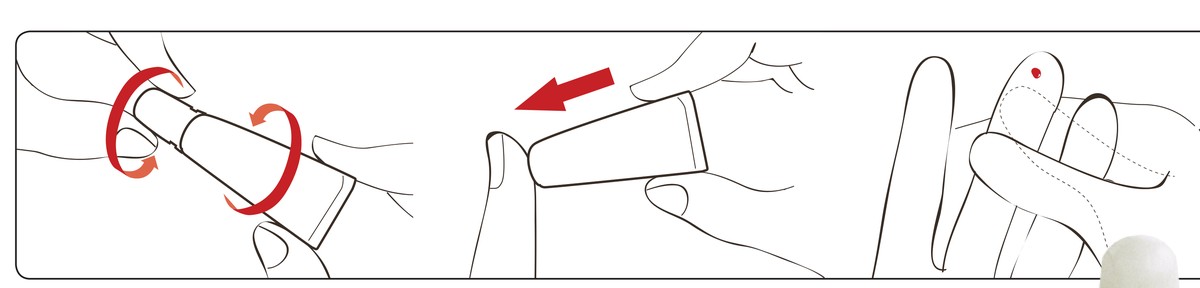
Standard lancets, used with a lancing device, are the normal choice for personal daily testing. The device holds the lancet, sets the depth, and fires it.
Safety lancets, such as the Aktivsafe, are single use and self-contained. They fire once and the point retracts and locks permanently, so it cannot be reused and cannot cause a needlestick injury afterwards.
That matters in two situations:
- Anywhere someone tests another person, such as a pharmacy, a clinic or a carer helping at home, where a used sharp point is a risk to the person holding it
- Where a device is impractical, including travel and emergencies
A safety lancet costs more per test. It buys the guarantee that it cannot be reused and cannot stick anybody afterwards.
Disposal
Used lancets are sharps. They do not go in household rubbish or recycling.
Use a proper sharps container, and follow your state's disposal arrangements. Your pharmacy or local council can tell you where to return a full container. Many pharmacies take them.
Frequently asked questions
How often should I change my lancet? Every test. It is sterile and sharp once.
Can I reuse a lancet just for myself? It is not intended for reuse. It is blunt after the first use, and the sterility is gone.
Why does testing hurt more than it used to? A reused lancet, a depth setting higher than you need, or testing the same spot repeatedly. Usually the first.
What is the difference between a lancet and a safety lancet? A lancet is used in a lancing device and the device sets the depth. A safety lancet is self-contained, fires once and locks closed so it cannot be reused.
Do lancets fit any lancing device? Not always. Use the lancets specified for your device.
This article is general information, not medical advice. Always follow the instructions supplied with your lancing device and meter, and your diabetes team's advice.


