

The six steps
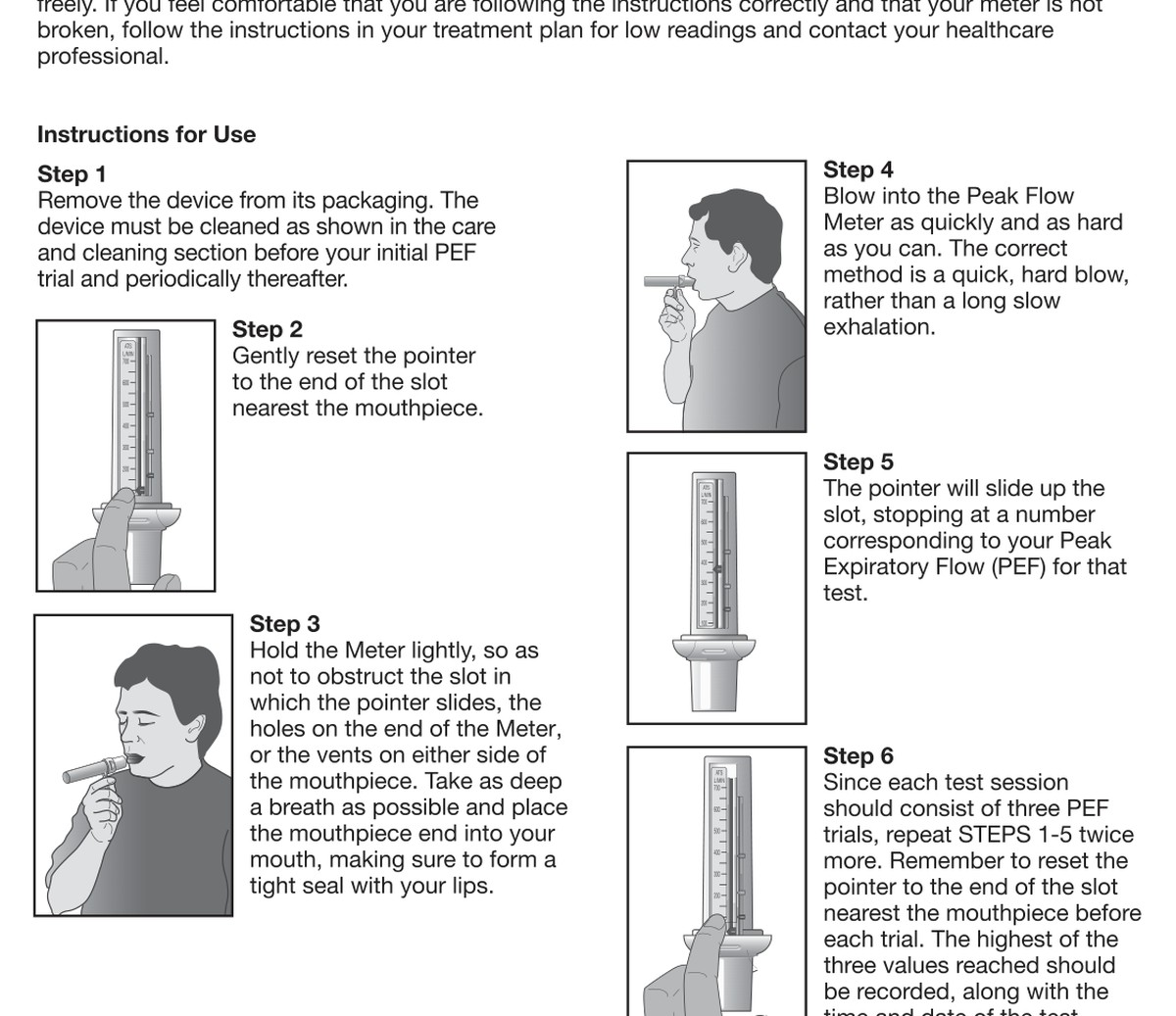
- Check the meter is clean, and clean it before the first use.
- Reset the pointer gently to the end of the slot nearest the mouthpiece.
- Hold the meter lightly, taking care not to block the slot the pointer slides in, or the holes on either side of the mouthpiece. Take as deep a breath as you can, put the mouthpiece in your mouth and form a tight seal with your lips.
- Blow as quickly and as hard as you can. This is a short sharp blast, not a long slow breath out.
- Read the number where the pointer has stopped.
- Repeat twice more, resetting the pointer each time. Record the highest of the three, with the date and time.
The two things people get wrong
Blowing long instead of blowing hard. This is the big one. Peak flow measures the fastest speed you can push air out, not how long you can keep going. A quick, hard blast gives a true reading. A long controlled exhalation gives a low one, and it looks exactly like worsening asthma.
Think of blowing out candles on a cake, not inflating a balloon.
Covering the slot with your fingers. The pointer has to slide freely, and the holes beside the mouthpiece have to stay clear. Hold the meter lightly, towards the end away from the mouthpiece.
Three blows, and do not average them
Each test session is three attempts. Record the highest.
Do not average the three values. This catches a lot of people out because averaging feels more rigorous. It is not. Peak flow is a maximum effort test, so the best of three is the measurement. A low attempt means the effort or the technique was not quite right, not that your lungs are halfway between.
Some people need a short rest between attempts. That is fine.
When to take a reading
Usually two or three times a day, most often on waking and before bed, at the same times each day.
Always take one when you have symptoms, whatever the time.
Record every reading on the diary chart supplied with the meter: date, time, and the number. Connect the dots across days and the trend becomes visible, which is what your doctor actually wants to see.
Cleaning a peak flow meter
Worth reading, because this is the one respiratory device where the advice is the opposite of a spacer.
- Detach any mouthpiece accessories. Do not take the device itself apart.
- Immerse it in warm, but not hot, mild detergent solution for 2 to 3 minutes, and no more than 5.
- Agitate it in the water to clean it thoroughly.
- Rinse in warm water, and rinse thoroughly. Unlike a spacer, a peak flow meter is rinsed.
- Shake out the excess water, holding the end furthest from the mouthpiece.
- Let it dry completely before using it again.
Do not clean it with a brush, a cloth or any other implement. That damages the mechanism.
Hot water can distort the device. Warm only.
Looking after it
- A peak flow meter is a single patient device
- Check the pointer still slides freely
- Check the zone markers are still where they should be after cleaning
- Replace the meter if it has been dropped and the pointer sticks, or if readings look implausible when you feel well
If a reading looks wrong
Before assuming the worst, rule out the meter.
Check the pointer moves freely along the slot and that nothing is obstructing it. Check your hand is not covering the slot or the side holes. Then repeat the test with a proper quick hard blow.
If the meter is working and the reading is genuinely low, follow your asthma action plan.
Frequently asked questions
How many times should I blow? Three, in each session. Record the highest.
Should I average my three readings? No. Record the highest of the three.
Standing or sitting? Be consistent. Use the same position each time so your readings compare properly, and follow any instruction from your doctor.
My child cannot blow hard enough to register. A windmill trainer attachment turns it into a game and teaches the short sharp blow. Ask your pharmacist.
How often should I clean it? Before first use and periodically after, following the method above.
This article is general information, not medical advice. Always follow the instructions for use supplied with your device, and your asthma action plan.


