

The short version
A monitor being approved for sale is not the same as a monitor having been tested for accuracy against a reference standard in real patients. The first is a regulatory requirement. The second is clinical validation, and it is a smaller club than most people assume.
What a validation study actually involves
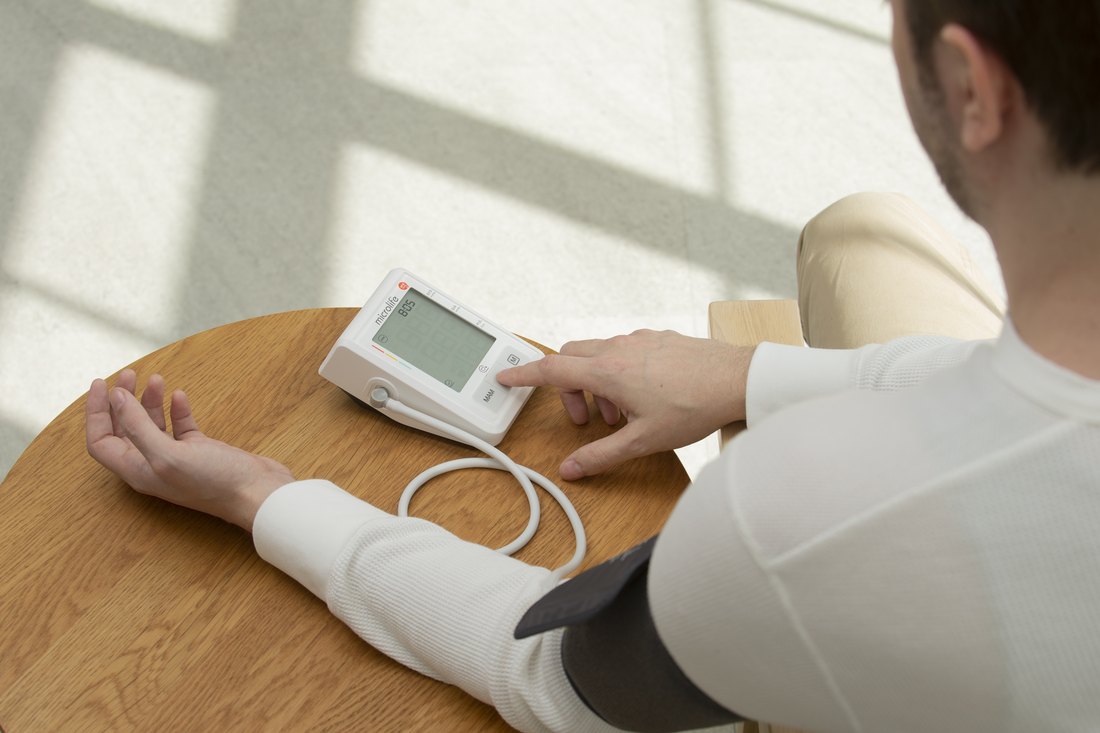
An independent study follows a published protocol. The best known are the British and Irish Hypertension Society protocol, the European Society of Hypertension International Protocol, and the AAMI/ISO standard.
In broad terms:
- A set number of people are recruited, covering a spread of blood pressures and arm sizes, not just easy cases
- Trained observers measure each person with a mercury sphygmomanometer or equivalent reference, the method the monitor is being judged against
- The device measures the same person under the same conditions
- Readings are compared across hundreds of paired measurements
- The device passes or fails against defined limits of agreement
The point is the comparison. Validation is not a manufacturer saying a monitor is accurate. It is an independent study showing how far its readings sit from a reference, in real arms.
Reading the grade
Under the BIHS protocol, devices are graded A to D separately for systolic and diastolic pressure. A is the best.
So an A/A grade means top marks on both measurements. That is the grade carried by the Able B2 Basic and the Able B3 AFIB Advanced.[1]
A monitor with no grade at all has usually not been through the process.
Behind that grade sits the testing itself. The Able and Microlife monitors have been clinically validated across more than 10,000 patient studies against international accuracy standards.[2] Validation is not one small trial, it is a body of work.
Why this matters more than the feature list
Home readings are not a curiosity. They are used to decide whether someone starts blood pressure medication, whether a dose changes, and whether treatment is working.
Professional guidelines on measurement exist precisely because the consequences of inaccuracy are real: misdiagnosis of hypertension, and inappropriate prescribing.[2]
A monitor with a large memory, a backlight and an app, but no validation, is a well equipped device that has never been shown to produce the right number. The features are the easy part.
Where to look it up yourself
You do not have to take our word for any of this.
STRIDE BP is an international scientific non-profit backed by the European Society of Hypertension, the International Society of Hypertension and the World Hypertension League. It maintains the list of blood pressure monitors that have passed validation, and that list is what doctors and pharmacists are pointed to.
Our monitors are on it.[3]
- Microlife BP B3 Advanced AFIB, validated to the AAMI / ESH / ISO Universal Standard (ISO 81060-2:2018), validation study published in 2021, for adults, with a validated cuff range of 22 to 42 cm.
- Microlife BP B2 Basic, listed on the same register.
That standard matters. ISO 81060-2:2018 is the current international standard for the clinical validation of automated blood pressure monitors, and it is a harder test than the older protocols many devices still quote.
Search either model at stridebp.org and you will find it. A monitor that is not on that list, from any brand, has usually not been through this.
The part almost nobody asks about: who was it validated on?
This is the question that separates monitors, and it is the one most buyers never think to ask.
Basic validation is carried out on a group representing an average population with no diagnosed conditions. Many monitors on the market have either not been validated at all, or have had only this.
The problem is that an oscillometric monitor works by reading the pulse through the artery wall, and some conditions change the artery itself. A monitor validated on healthy volunteers may not read accurately on someone whose arteries are stiffened by diabetes or kidney disease, or on a pregnant woman, or on a child who cannot sit still. The reading looks normal. It is simply wrong.
For that reason, medical standards authorities require that a monitor may only be recommended for a special patient group if it has been validated in that group.
Microlife monitors have passed those additional validations, and can be recommended for:
| Group | Why a separate validation is needed |
|---|---|
| Diabetes | Type 1 and type 2 can stiffen the arteries, which affects the measurement |
| Pregnancy and pre-eclampsia | Most oscillometric monitors underestimate blood pressure in pre-eclampsia, so they may only be recommended in pregnancy if specifically tested |
| End-stage renal disease and dialysis | Very high rates of hypertension combined with stiff, calcified arteries |
| Children and adolescents | A high respiration rate and difficulty sitting still need an algorithm that filters those artefacts, plus a wide cuff range |
| Elderly, obesity, hypotension | Arterial change, very low readings, and cuff fit all affect accuracy |
The pre-eclampsia point deserves emphasis. A monitor that quietly reads low in pre-eclampsia is not an inconvenience, it is a safety problem, and it is exactly the kind of thing a general validation would never reveal.
Cuffs are validated too
Validation is normally done with one standard cuff. Microlife has validated across cuff types and sizes, including an explicit validation of the XL cuff for accurate measurement on large arm circumferences.
Microlife is the only provider of home blood pressure monitors with an explicit XL cuff validation.[4]
That matters because a large arm is otherwise exactly where a reading goes wrong, and it means the bigger cuff is not a compromise on accuracy.
How to check a monitor for yourself
- Look for a named protocol and a grade, such as "BIHS protocol, A/A". A bare phrase like "clinically tested" with no protocol named tells you very little.
- Check the independent lists. STRIDE BP and the BIHS both publish lists of validated devices, and they are the quickest way to confirm a claim.
Validation does not survive bad technique
A validated monitor still gives a wrong reading if it is used badly. The two largest avoidable errors are both to do with the cuff.
- A cuff that is too small for the arm can push a systolic reading up by 10 to 40 mmHg.[2]
- A cuff placed over clothing can shift systolic by 10 to 50 mmHg.[2]
Those are not rounding errors. Either one is large enough to move someone from normal into treatment.
There is a separate article on cuff sizing and measuring technique, and it is worth more to your readings than the difference between any two monitors.
Frequently asked questions
Is my monitor useless if it is not validated? Not useless, but you cannot know how accurate it is. If readings are informing treatment, that matters. Taking it to your pharmacy and comparing it against a reference monitor is a reasonable check.
Does validation expire? Validation applies to the model as tested. Devices should still be serviced or replaced as the manufacturer directs, and any monitor that has been dropped or damaged should be checked.
Does a more expensive monitor mean a more accurate one? No. Price usually reflects features. Accuracy is about validation, correct cuff size and good technique.
Are pharmacy monitors validated? Some are, some are not. Ask for the protocol and the grade, and check against the published lists.
This article is general information, not medical advice. Always follow the instructions for use supplied with your device.
References
- Clinically validated to the British and Irish Hypertension Society protocol, grade A/A.
- ABLE and Microlife blood pressure monitors, clinically validated across more than 10,000 patient studies to international accuracy standards.
- STRIDE BP validated device list, stridebp.org. Microlife BP B3 Advanced AFIB, AAMI/ESH/ISO Universal Standard (ISO 81060-2:2018), validation published 2021, adults, cuff 22 to 42 cm. Microlife BP B2 Basic also listed.
- Pickering TG et al. Recommendations for blood pressure measurement in humans. Hypertension 2005;45:142-161. See also O'Brien E et al, European Society of Hypertension recommendations for conventional, ambulatory and home blood pressure measurement, Journal of Hypertension 2003;21:821-848, and Handler J, The importance of accurate blood pressure measurement, The Permanente Journal 2009;13(3):51-54.


