The short answer
Aim for 40% to 60% relative humidity indoors.
That band is the one generally recommended for comfort and for respiratory health, and both ends of it matter. Most people only worry about one direction, usually dryness, and then overshoot into the problem at the other end.
Below 40%: dry air
When indoor air drops below about 40%, the usual complaints follow:
- A dry, tickly cough, particularly overnight
- A dry or blocked nose, and nosebleeds in some people
- Dry, itchy skin and lips
- Sore eyes
- Waking with a dry throat
Dry air is common in winter, because heating warms air without adding moisture to it, and in air-conditioned rooms in summer for the same reason. It is also why a cough so often seems worse at night in a heated bedroom.
Adding moisture back is what a cool mist humidifier or vaporiser is for.
Above 60%: damp air
This is the half people forget, and it matters more if anyone in the house has asthma or allergies.
Above about 60%, the conditions start to favour dust mites and mould, which are two of the most common triggers for asthma and allergy. You can also get condensation on windows, damp patches on walls, and that heavy, clammy feel in a closed bedroom.
So more humidity is not better. A room that feels damp has gone too far, and running a humidifier harder is the wrong response.
This is the trap with steam vaporisers in particular. Hot vapour condenses on the first cool surface it meets, so a steam unit left running overnight in a closed room produces wet windows and damp walls, which is precisely the environment you were trying to avoid. There is a separate page comparing cool mist and steam.
How to tell where you are
You cannot judge humidity by feel with any accuracy. Rooms that feel dry are sometimes fine and rooms that feel fine are sometimes damp.
Two options:
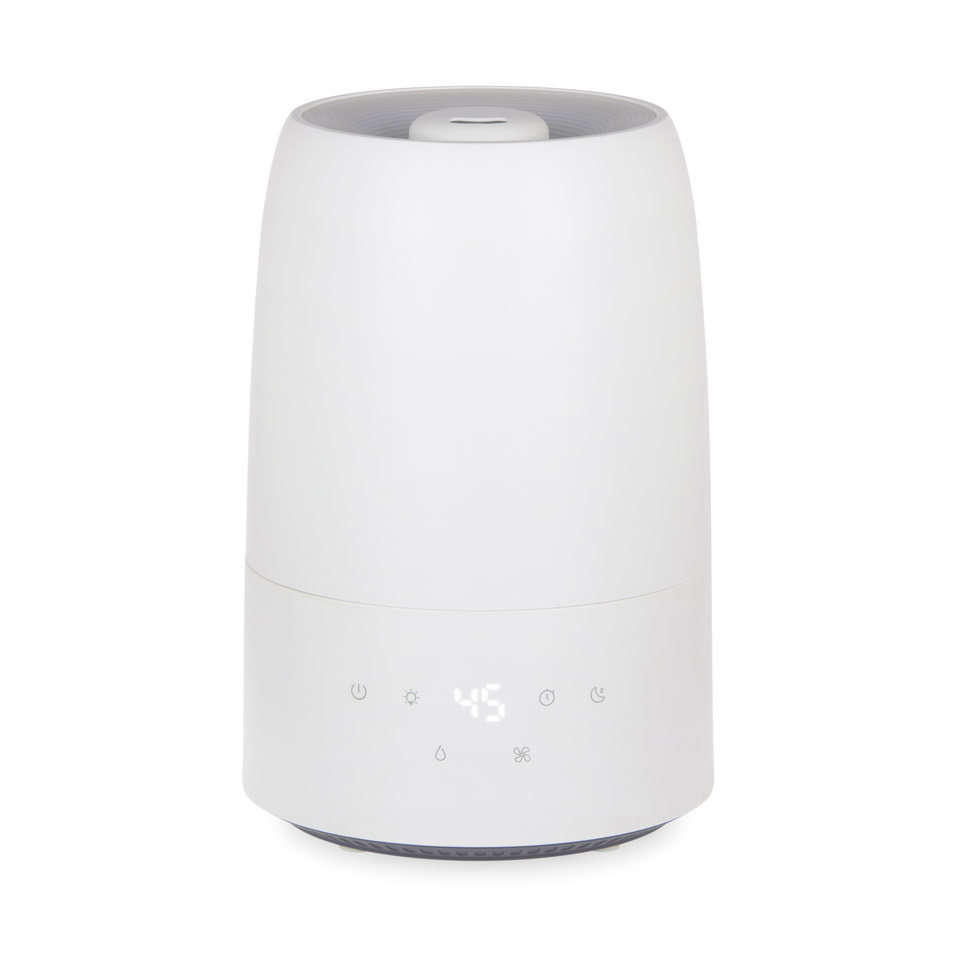
- A humidifier that displays the room humidity, so you can see the number and adjust the output. The Able VapourMist shows humidity as a percentage on its display, with low and high output settings, which is unusual at this level.
- A separate hygrometer, a small inexpensive meter you leave in the room.
Either way, the point is to aim at a number rather than guess.
Getting it right in practice
- Start on the low output setting and watch what the humidity does over an hour or two.
- Run it for part of the night rather than continuously, if surfaces start to feel moist.
- Watch the windows. Condensation in the morning is the clearest sign you have gone past 60%.
- Ventilate. A bedroom with the door closed all night and a humidifier running will climb. Airing the room in the morning does more than people expect.
- Position it on a firm, flat surface, not on carpet, and not right beside the bed, so the mist disperses rather than settling in one spot.
A note on asthma and allergies
Humidity is one factor among several, and it is not a treatment.
Getting the range right removes two triggers, dry irritated airways at one end and dust mites and mould at the other. That is worth doing. It does not replace asthma medication, an asthma action plan, or advice from your doctor.
Frequently asked questions
What humidity should a baby's room be? The same 40 to 60% range. The bigger consideration in a child's room is choosing a unit with no heat element, which removes the burn risk entirely.
Can a humidifier make a room worse? Yes, if it is left running unchecked. Above 60% the conditions favour dust mites and mould, and a unit that is not cleaned puts whatever is growing inside it back into the air. Keeping it in range and cleaning it is the whole job.
Why do my windows fog up when the humidifier runs? The room is too humid, or the unit is too close to the window. Turn the output down.
Do I need to measure humidity, or can I just judge it? Measure it. Feel is unreliable, and both too dry and too damp cause problems.
This article is general information, not medical advice. If you or your child has asthma or allergies, follow your doctor's advice and your asthma action plan.